
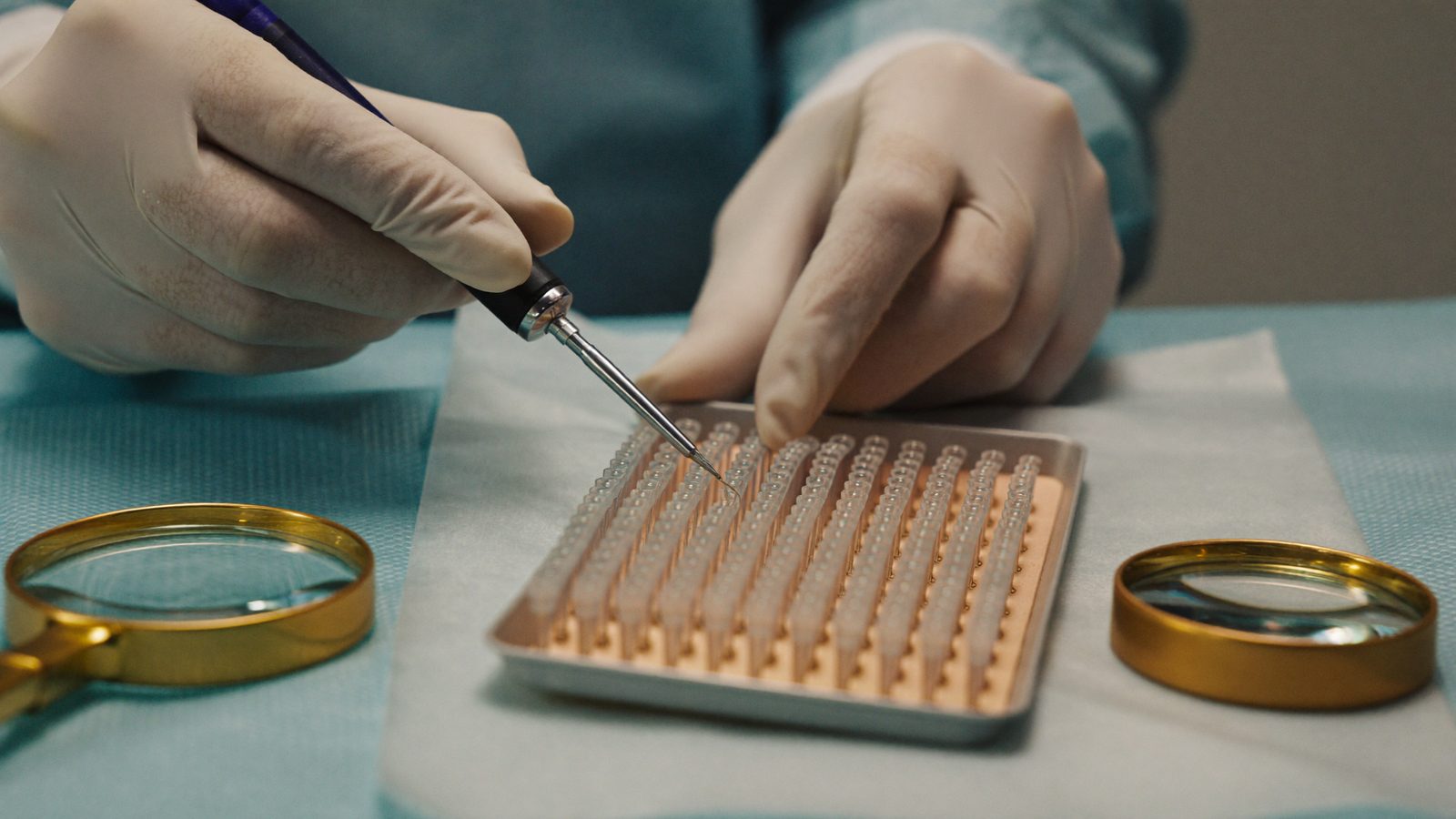
Choosing a hair transplant technique is one of the first decisions patients ask about, and it is often the most confusing. Clinics use a mix of acronyms (FUE, FUT, DHI, robotic FUE) and each one is marketed as the best. The truth is simpler: every modern technique moves healthy follicles from the back and sides of your scalp to the areas that are thinning. What differs is how the grafts are removed, how they are placed, and what that means for scarring, recovery and the number of grafts you can get in one session.
This guide explains each hair transplant technique in plain terms, compares them side by side, and shows how a surgeon decides which one fits your hair loss pattern, donor supply and lifestyle. At Nova Medical NYC, every plan is reviewed and overseen by Dr. Val Prokurat, MD, and the recommendation always starts with your scalp, not with a favorite method.
The Two Ways to Harvest Grafts: FUE and FUT
Every hair transplant has two stages: harvesting the follicles from the donor area and implanting them in the recipient area. The harvesting stage is where the two main techniques split.
Follicular Unit Extraction (FUE) removes follicular units one at a time using a tiny circular punch, usually under 1 mm wide. Each extraction leaves a small dot that heals within days and becomes very hard to see once the hair grows back. Because there is no strip and no stitches, you can wear your hair short afterward, and most people are back at a desk within a few days. Our FUE hair transplant in NYC page explains how the procedure runs at our Upper East Side clinic.
Follicular Unit Transplantation (FUT), also called the strip method, removes a thin strip of skin from the back of the head. The strip is then divided under microscopes into individual grafts, and the donor area is closed with a fine, trichophytic closure that lets hair grow through the scar line. FUT can yield a high number of grafts in one session and keeps the donor area unshaven, but it leaves a linear scar that is visible if you wear your hair very short.
| Factor | FUE | FUT (strip) |
| Donor scar | Tiny scattered dots, easy to hide even with short hair | One fine linear scar, hidden by surrounding hair |
| Donor shaving | Usually shaved; non-shave options exist for smaller cases | No shaving needed in most cases |
| Typical recovery | Back to desk work in 2 to 5 days | Back to desk work in 5 to 7 days, stitches or staples removed around day 10 |
| Grafts per session | Up to about 4,000 in a long day, depending on donor density | Often similar or higher, depending on scalp laxity |
| Best suited to | Most patients, short hairstyles, active lifestyles | Large sessions, tight budgets on graft count, patients who wear hair longer |
What About DHI?
Direct Hair Implantation (DHI) is not a separate way to harvest grafts. It is an FUE harvest paired with a different way of placing them. Instead of making recipient sites first and then inserting grafts with forceps, DHI loads each graft into a pen-shaped implanter (often called a Choi implanter) and places it in a single motion that creates the site and inserts the graft at the same time.
The advantages are precise control of angle and depth and the ability to work between existing hairs with less disturbance, which suits dense packing along a hairline or work in areas where native hair is still present. The trade-offs are that it is slower, it needs a larger, highly trained team, and it typically costs more per graft. For a detailed look at when it is worth it, see our DHI hair transplant page.
Key point: FUE and DHI share the same harvesting method. The difference is only in how grafts are placed. When a clinic says "DHI instead of FUE," it usually means "a different implantation tool," not a different operation.
Robotic FUE and Automated Devices
Robotic systems such as ARTAS use cameras and a robotic arm to select and score follicles in the donor area, while devices such as NeoGraft and SmartGraft use motorized punches with suction to collect grafts. They are all variations of FUE harvesting, and they are often marketed under the device brand rather than the technique.
Automation can make extraction more uniform, but it does not replace judgment. The machine cannot design your hairline, decide how many grafts your donor area can safely give over a lifetime, or adjust its angle for curly or grey hair as easily as an experienced hand. At Nova Medical NYC, the team uses precise motorized handheld tools for manual FUE under Dr. Prokurat's oversight. If you are weighing a robot against a hands-on team, our comparison of ARTAS vs. manual FUE goes into the details.
How Surgeons Choose a Technique for You
A good recommendation comes from a few measurable factors rather than a preference for one method. During your assessment, these are the questions that shape the plan:
- How much hair have you lost, and how much might you lose? Your stage on the Norwood or Ludwig scale, your age and your family history help predict whether you will need more grafts later.
- How dense and how large is your donor area? Density is measured in follicular units per square centimeter. A dense donor area supports bigger FUE sessions, while a lax scalp with moderate density may favor FUT for very large cases.
- How do you wear your hair? If you like a short fade or a buzz cut, FUE is usually the better choice because there is no linear scar.
- What are your hair characteristics? Curly, coarse, grey or very fine hair changes how easily grafts can be extracted and how much coverage each graft gives.
- How much downtime can you take? FUE generally allows a faster return to work and exercise.
The graft count matters as much as the technique. Our guide on how many grafts you need explains how surgeons estimate it from your pattern of loss and donor density.
Comparing Results, Scarring and Cost
When the work is planned and carried out well, FUE, FUT and DHI all produce natural, permanent results. The transplanted follicles come from the DHT-resistant zone at the back of the head and keep that resistance in their new location. Growth follows the same timeline for every technique: shedding of the transplanted hairs around weeks two to six, early growth from month three or four, a visible change around month six, and the full result at 12 to 18 months.
Where they differ is in the donor area and the price. FUE spreads small dots across a wide area; FUT concentrates the scar into one line. DHI usually costs more because placement takes longer. At our clinic, pricing is per graft, from $3.99 to $7.99 depending on technique and case complexity, with most procedures totaling between $4,000 and $15,000. The hair transplant cost page breaks down what changes the price.
| Technique | Harvest | Placement | Main strength |
| FUE | Individual punch extraction | Pre-made sites, forceps | No linear scar, quick recovery |
| FUT | Single strip of skin | Pre-made sites, forceps | High yield, no donor shaving |
| DHI | Individual punch extraction | Implanter pen, site and graft in one motion | Fine control of angle and density |
| Sapphire FUE | Individual punch extraction | Sites made with sapphire blades | Very fine recipient sites |
| Robotic FUE | Robot-assisted punch extraction | Usually manual placement | Uniform extraction on suitable hair types |
Common Myths About Hair Transplant Techniques
"FUE is scarless." It is not. FUE leaves very small round scars that are easy to hide, but no surgical technique is truly scarless. A clinic that promises zero scarring is overselling.
"FUT is outdated." FUT is less common than it was, but it remains a useful option for some patients who need many grafts and prefer to keep their hair longer.
"The newest device gives the best result." Results depend far more on planning, graft handling and the experience of the team than on the device brand. A well-run manual FUE procedure will outperform a poorly planned robotic one.
"One technique works for everyone." Hair loss patterns, donor supply and hair types vary widely, which is why the recommendation should come after an in-person assessment of your scalp. If you are not sure whether surgery is the right step at all, start with our guide to whether you are a candidate for a hair transplant.
What to Ask During Your Consultation
Bring a short list of questions so you leave with a clear picture rather than a sales pitch. Ask which technique is recommended and why it fits your scalp in particular. Ask how many grafts are planned for each area, and how many your donor area could provide over your lifetime. Ask who will be involved on the day of surgery and how the physician oversees the team. Ask how grafts are stored between extraction and placement, and what the aftercare and follow-up schedule look like.
A clinic that answers these questions in detail, shows you before and after results for similar cases, and is comfortable recommending a smaller procedure when that is the honest answer is a clinic that is choosing the technique for you rather than for itself. You can see the steps our team follows in the Nova Medical FUE Protocol.
Not Sure Which Technique Fits You?
A free assessment with Dr. Val Prokurat, MD includes a donor density check, a graft estimate and a clear recommendation between FUE, FUT and DHI, with pricing in writing.