
"How many grafts do I need?" is usually the first number patients want, because it drives both the price and the result. The honest answer is a range, not a single figure, and it depends on three things: how much area you want to cover, how dense you want that area to look, and how many follicles your donor area can safely give, both now and over the rest of your life.
This guide explains how surgeons work out how many grafts a patient needs, gives typical ranges for each stage of hair loss, and shows why the best plans are built around your donor supply rather than around the biggest number a clinic can sell. At Nova Medical NYC, every graft plan is reviewed by Dr. Val Prokurat, MD before it is quoted.
What a Graft Actually Is
A graft is not a single hair. It is a follicular unit, the natural grouping in which hair grows, and it usually contains one to four hairs. Single-hair grafts are used at the very front of the hairline for softness, while two-, three- and four-hair grafts are placed behind them to build density. That is why two patients with the same number of grafts can end up with different amounts of visible hair: the average number of hairs per graft varies from person to person.
Most people have an average of roughly two hairs per graft, so 2,000 grafts usually means somewhere around 4,000 hairs. Thick, coarse or curly hair covers more scalp per hair than fine, straight hair, which also changes how far each graft goes.
Typical Graft Ranges by Stage of Hair Loss
Surgeons use the Norwood scale for male pattern loss and the Ludwig scale for women. The table below shows common ranges for men. They are a starting point for a conversation, not a quote.
| Norwood stage | What it looks like | Typical grafts |
| Stage 2 to 3 | Recession at the temples, mild thinning at the front | 1,000 to 2,000 |
| Stage 3 vertex | Temple recession plus thinning at the crown | 1,500 to 2,500 |
| Stage 4 | Deeper frontal loss and a visible crown spot | 2,500 to 3,500 |
| Stage 5 | Front and crown loss starting to merge | 3,500 to 4,500, sometimes in two sessions |
| Stage 6 to 7 | Large bald area with a horseshoe of remaining hair | 4,500 to 6,000 or more, usually in stages |
These ranges assume the goal is natural coverage, not the density you had at eighteen. A full head of native hair holds roughly 80 to 100 follicular units per square centimeter, but the eye reads an area as full at about half of that. Good surgeons aim for convincing density where it matters most and use the donor supply carefully everywhere else.
Your Donor Area Sets the Ceiling
The donor area is the band of hair on the back and sides of your head that is genetically resistant to DHT, the hormone behind pattern hair loss. Follicles moved from this zone keep that resistance, which is why transplanted hair lasts. But the zone is finite, and once a follicle is moved it does not grow back where it came from.
Most people have somewhere between 6,000 and 8,000 FUE grafts that can be harvested safely over a lifetime, although some have far fewer and a lucky few have more. The exact figure depends on donor density, the size of the safe zone and the characteristics of your hair. Taking too many grafts at once, or harvesting outside the safe zone, can leave the back of the head visibly thin and can mean transplanting hair that later falls out. Nova Medical does not overharvest: if your donor area cannot support a plan without thinning, we will tell you and adjust it.
Rule of thumb: the right graft count is the one that gives you a natural result now while leaving enough donor reserve for any future loss. A plan that spends your whole donor supply in one session is a plan with no backup.
How Surgeons Allocate Grafts Across the Scalp
The face is framed by the hairline, so the front of the scalp gives the biggest visual return for every graft. That is why most plans prioritize the hairline and the area just behind it, then the mid-scalp, and the crown last.
- Hairline and front third: the highest density and the most single-hair grafts, angled sharply forward to look natural from every direction. Our guide to natural-looking hairline design explains why this area takes the most planning.
- Mid-scalp: moderate density that blends the front into the back and supports the appearance of fullness when you style your hair.
- Crown: the hardest area to fill because hair grows in a spiral there and the area keeps expanding as loss progresses. Crowns often need more grafts than people expect for a smaller visible change. Our article on FUE for the crown, hairline and temples covers why each zone is treated differently.
Allocation also has to plan for the future. If you are 28 with a receding hairline and a family history of extensive loss, a dense, low hairline today could leave an island of hair surrounded by thinning later. A responsible plan places the hairline where it will still look right in twenty years.
What Changes the Number in Your Case
Two people at the same Norwood stage can need very different graft counts. These are the main reasons:
- Hair caliber and curl. Thick, wavy or curly hair covers more scalp per graft, so fewer grafts can produce the same visual density.
- Hair and skin color contrast. Dark hair on light skin shows thinning more than light hair on light skin or dark hair on dark skin. Lower contrast needs fewer grafts to look full.
- Hairstyle. If you wear your hair longer or swept back, you can make a moderate density look fuller than a short, spiky cut would.
- Remaining native hair. Existing thin hair adds to the final look, and protecting it with medication can reduce how many grafts you need now and later.
- Age and progression. Younger patients need conservative plans because their loss is likely to continue.
One Session or Two?
At our clinic a single day can move up to about 4,000 grafts, depending on donor density and the size of the area. Larger plans are often split into two sessions about 10 to 12 months apart. Staging has real advantages: the first procedure shows how your hair grows and how dense the result looks, and the second session can then be placed precisely where it adds the most.
Splitting also protects the donor area by spreading extraction across two healing cycles. If someone promises 6,000 or more grafts in a single day, ask how the donor area will look afterward and how graft survival is protected during such a long procedure.
Grafts and Price
Because most clinics price per graft, the graft count is the single biggest factor in cost. At Nova Medical NYC, pricing runs from $3.99 to $7.99 per graft depending on technique and complexity, and most procedures fall between $4,000 and $15,000. There are no session fees, and 0% financing is available for the first 12 months. The hair transplant cost in NYC page explains how a quote is put together, and you can see real graft counts alongside results in our before and after gallery.
Be cautious of quotes that seem low because the graft count is low. A quote for 1,500 grafts may look attractive, but if your pattern genuinely needs 2,800 the result will look thin. The reverse is also true: a high graft count is not a sign of quality if your donor area cannot support it.
How Your Graft Estimate Is Made
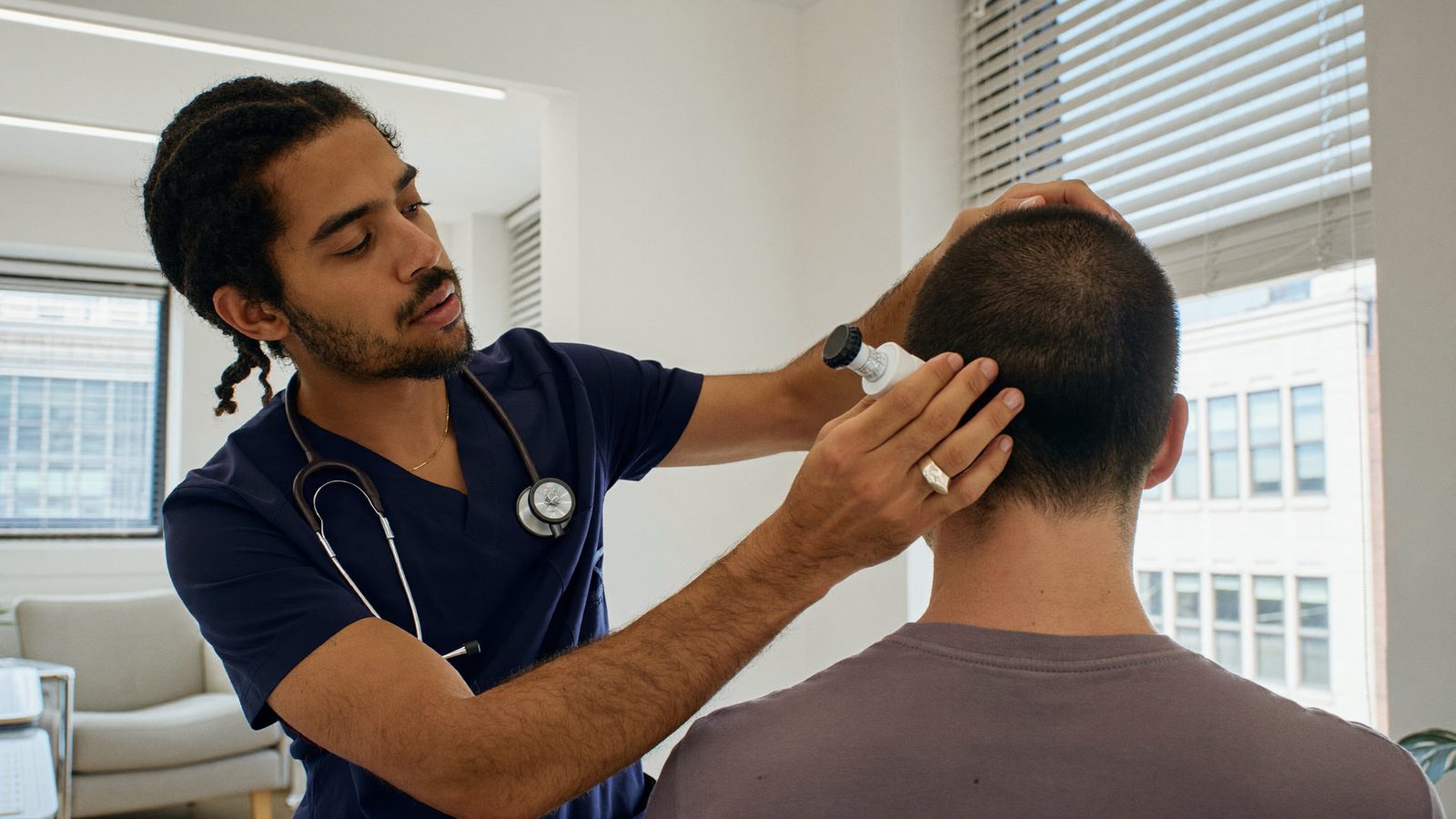
An accurate estimate needs an in-person look at your scalp. During a free assessment, the team maps your areas of loss, measures donor density with magnification, checks scalp laxity and hair characteristics, and talks through your goals and how you like to wear your hair. You leave with a written plan that shows the number of grafts for each area, the technique, and the total price. If you are still deciding between methods, read our comparison of FUE, FUT and DHI before your visit.
Get Your Personal Graft Estimate
A free assessment with Dr. Val Prokurat, MD measures your donor density and maps your hair loss, so you get a written graft count and price instead of a guess.