
A natural-looking hairline is the single most important part of a hair transplant. You can have thousands of healthy grafts growing perfectly, but if the front edge is too straight, too low or angled the wrong way, people will notice. When the hairline is right, nobody looks twice, which is exactly the point.
This guide explains what separates a natural-looking hairline from an obvious one: the angle and direction of each graft, the use of single-hair grafts at the front, the soft irregularity of a real hairline, and how the shape is matched to your face, age and future hair loss. At Nova Medical NYC, Dr. Val Prokurat, MD reviews and approves every hairline design before the procedure begins.
Why Some Transplants Look Obvious
Older transplants earned a bad reputation for a reason. Large "plug" grafts were placed in rows, often pointing straight out from the scalp, which created the doll-hair look many people still picture. Modern follicular unit techniques solved the size problem, but a hairline can still look wrong today if it is designed carelessly.
The most common giveaways are a perfectly straight or perfectly rounded line, a hairline that sits too low for the patient's age, grafts that point upward instead of forward, and thick multi-hair grafts placed right at the edge. Each of these is a planning or placement error, not a limitation of the technique. Patients living with these results can often be helped, and our hair transplant repair page explains how.
Graft Angle and Direction
Hair at the front of the scalp does not grow straight up. It emerges at a very low angle, often 15 to 30 degrees from the skin, and points forward and slightly to the side. Toward the temples the direction changes again, sweeping downward and back. If grafts are placed at the wrong angle, the hair stands up, catches light differently and shows the scalp between grafts.
Matching angle and direction is the main reason placement takes time. Each recipient site is made by hand at the correct angle, then the graft is inserted to follow it. Fine instruments help, which is one reason some patients choose DHI or sapphire-blade sites for hairline work, but the result depends on the hands and eyes of the team rather than the tool alone.
Single-Hair Grafts at the Front
A natural hairline is soft. If you look closely at anyone's front edge, the first few millimeters are made of single fine hairs, with denser groups appearing further back. This gradual transition, often called the transition zone, is what stops a hairline from looking like a wall.
Good hairline design copies that pattern. The front row uses carefully selected one-hair grafts, the next rows use two-hair grafts, and three- and four-hair grafts are kept behind them to build density. When grafts are sorted by hair count after extraction, the team can place each type exactly where it belongs.
| Zone | Graft type | Purpose |
| Leading edge (first 3 to 5 mm) | Single-hair grafts, slightly irregular | Softness and a believable edge |
| Transition zone | One- and two-hair grafts mixed | Gradual build-up of density |
| Behind the hairline | Two- to four-hair grafts | Volume and coverage |
| Temple points and corners | Fine single hairs, sharp downward angle | Frames the face and blends with the sides |
Irregularity: The Detail That Fools the Eye
No natural hairline is a clean line. It has micro-irregularities: small clusters, tiny gaps and stray hairs slightly ahead of the main edge. Surgeons create this deliberately, scattering a few single-hair grafts in front of the line and avoiding even spacing. Seen from conversational distance, this randomness reads as natural growth.
The overall shape also matters. Most adult male hairlines have gentle temporal recessions on each side, forming a shallow "M" or a softened curve rather than a straight line across the forehead. Filling the corners completely can make a hairline look juvenile and artificial on an adult face.
Quick test: a well-designed hairline should still look natural when your hair is wet, pushed back, or cut short. If a design only works when hair is styled forward, it is hiding a problem rather than solving it.
Choosing a Hairline for Your Face Shape
The right hairline height and shape depend on your facial proportions. A classic guide divides the face into thirds: hairline to brow, brow to the base of the nose, and nose to chin. A natural hairline usually sits roughly one third of the face height above the brows, often around 7 to 9 centimeters above the brow line in men, with adjustments for forehead slope and head size.
- Oval faces suit most hairline shapes, so the focus is on age-appropriate height and soft temples.
- Round or wide faces often benefit from slightly defined corners that add structure.
- Long faces can look more balanced with a hairline placed a little lower, if the donor supply and future loss allow it.
- Strong, angular faces usually look best with a natural recession at the temples rather than a straight, low line.
Patients often bring photos of actors or athletes. Those are useful for showing the look you like, but a celebrity hairline is not always realistic for your face or your donor supply. A good consultation explains what can be borrowed from that look and what would not age well.
Planning for the Future, Not Just Next Year
The biggest risk with hairlines is designing for the face you have at 25 instead of the face you will have at 45. Hair loss usually continues behind a transplanted hairline. If the new edge is set very low and the hair behind it thins over the following years, you can be left with an isolated strip of hair at the front that looks unnatural.
A mature, slightly conservative hairline protects you from that. It still frames your face and looks full, but it leaves room for future loss and preserves donor grafts for the crown or mid-scalp if you need them later. Our guide to fixing a receding hairline explains how age and family history shape that decision, and how many grafts you need shows how the front is balanced against the rest of the scalp.
Hairline Design for Women
Women's hairlines follow different rules from men's. A female hairline is usually rounder, without deep temporal recessions, and often slightly lower relative to the face. Many women also have fine baby hairs at the front and small "widow's peak" or "cowlick" patterns that give the edge its character. When women seek hairline work, it is often to lower a naturally high forehead, soften a hairline affected by traction from tight hairstyles, or rebuild areas thinned by years of styling.
The same principles apply, though: single fine hairs at the edge, careful angles that follow the natural flow, and an irregular, feathered boundary. Because many women wear their hair pulled back, the design has to look natural from every direction, including when the hairline is fully exposed. Our female hair transplant page explains how women's cases are planned.
How Density Affects the Look of a Hairline
A hairline does not need maximum density to look full. Because the front edge is built from single-hair grafts, it is naturally soft. The impression of fullness comes from the rows behind it. Placing grafts too densely right at the edge can actually look less natural, creating a hard border. Experienced teams concentrate density a few millimeters behind the edge, where it supports styling and hides the scalp, while keeping the very front light and feathered. This balance also protects your donor supply, so grafts are not wasted where they add little visible benefit.
How We Design Your Hairline
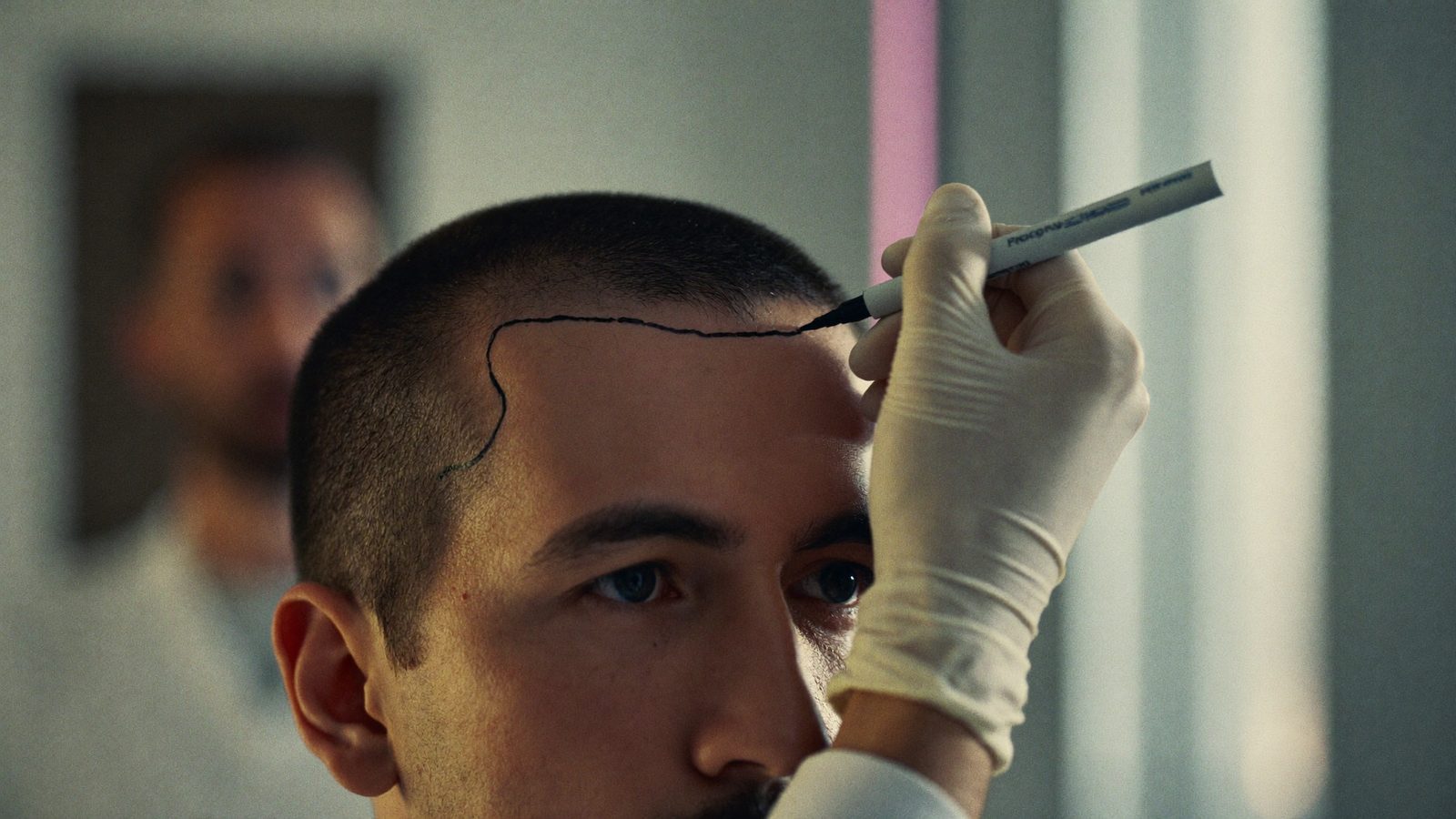
Hairline design at our Upper East Side clinic happens with you in the chair, in front of a mirror. The proposed line is drawn on your forehead, adjusted with you, photographed and checked from the front, the side and above before a single graft is moved. The team then sorts grafts by hair count, makes recipient sites at the angles mapped for each zone and places single-hair grafts at the leading edge. Every step follows the Nova Medical FUE Protocol, and you can see finished hairlines in our before and after gallery.
See Your New Hairline Before Surgery
During a free assessment, Dr. Val Prokurat, MD and the team draw a proposed hairline on your forehead, adjust it with you, and explain how many grafts it needs.