
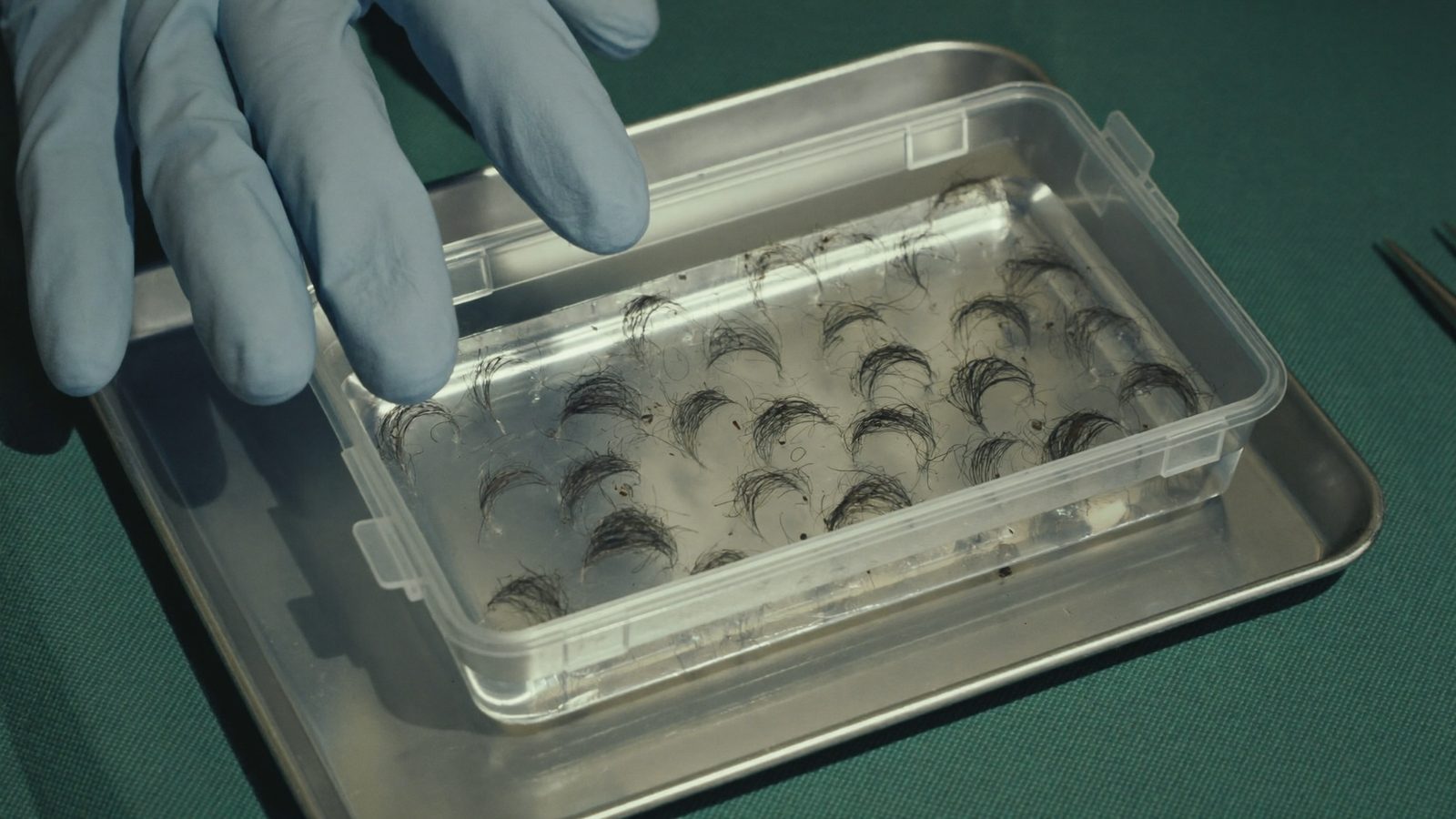
SmartGraft is a branded FUE device that many patients encounter while researching hair transplants. It is marketed around automated graft collection and a temperature-controlled storage chamber, and it is often presented as a more advanced alternative to traditional FUE. Understanding what SmartGraft actually changes, and what it does not, helps you judge whether the device name should influence your choice of clinic.
This guide explains how SmartGraft works, its genuine strengths, its limits and how it compares with careful manual FUE. At Nova Medical NYC, the team uses manual FUE hair transplantation with motorized handheld tools, overseen by Dr. Val Prokurat, MD.
How SmartGraft Works
SmartGraft is a tool for the extraction stage of FUE. A motorized handpiece with a small punch is guided by a member of the clinical team to separate each follicular unit from the surrounding skin. Gentle suction then draws the graft through tubing into a collection chamber designed to keep grafts cool and hydrated. The device can also count grafts as they are collected.
Importantly, SmartGraft is still operated by hand. The person holding the handpiece chooses each follicle, sets the angle and controls the depth. The automation is mainly in how grafts are collected and stored after they are freed.
What SmartGraft Does Well
- Organized collection. Suction moves grafts directly into a chamber, which can reduce handling with forceps during extraction.
- Controlled storage environment. The chamber is designed to keep grafts cool and moist between extraction and placement.
- Counting. Automatic counting gives a running total of grafts collected.
- Speed. Collection can be efficient in a well-run procedure.
The Limits of Automated Collection
Suction-based collection has trade-offs. Drawing grafts through tubing can, if not well controlled, stress or dehydrate delicate tissue, and the outcome depends heavily on how the device is set up and used. The handpiece still needs to be aligned with each follicle by a skilled operator, so extraction quality, including the transection rate, comes down to the person using it. The device does not design your hairline, assess your lifetime donor supply or place the grafts.
Graft survival depends on handling, time and storage: whether grafts are kept in a device chamber or in chilled storage solution in dishes, what matters is that they stay cool and hydrated, spend as little time out of the body as possible and are handled gently.
SmartGraft vs. Manual FUE With Chilled Storage
| Factor | SmartGraft | Manual FUE (Nova Medical approach) |
| Extraction tool | Motorized handpiece with suction | Motorized handheld punches |
| Who guides each extraction | Clinical team member | Clinical team member |
| Graft collection | Suction into a chamber | Gentle forceps removal |
| Graft storage | Device chamber, cooled and hydrated | Chilled storage solution, sorted by hair count |
| Graft sorting | After collection | Sorted under magnification for placement planning |
| Hairline design and placement | Clinical team | Clinical team, approved by the physician |
Both approaches can produce excellent results. The difference in outcomes between good clinics comes from the experience of the team, the time taken per graft and the care in sorting and placing grafts, rather than whether grafts travel through a tube or are lifted with forceps.
How We Store and Handle Grafts
At our clinic, grafts are extracted with motorized handheld tools, gently removed and placed into chilled storage solution as quickly as possible. They are sorted under magnification by the number of hairs in each graft, so single-hair grafts can go to the hairline and multi-hair grafts behind it. Handling is kept to a minimum throughout. These steps are part of the Nova Medical FUE Protocol, and they are the same factors any device-based approach aims to protect.
Is SmartGraft Worth Paying More For?
Device-branded procedures are sometimes priced higher to cover equipment costs. Before paying a premium for a device, ask whether the clinic can show better results for patients like you, and compare the rest of the plan: graft count, hairline design, physician oversight and follow-up. At Nova Medical NYC, pricing runs from $3.99 to $7.99 per graft, most procedures total between $4,000 and $15,000, with no session fees and 0% financing for the first 12 months. See our hair transplant cost page.
Questions to Ask Any Clinic Using a Device
- Who operates the handpiece, and how experienced are they?
- What transection rate do you typically see with my hair type?
- How long do grafts spend out of the body, and how are they stored?
- Who designs my hairline, and who places the grafts?
- Can you show results for patients with hair similar to mine at 12 months?
What Device Marketing Leaves Out
Device brands often advertise directly to patients with claims about speed, comfort and graft survival. These claims usually describe what the equipment is designed to do, not the result of any particular clinic. The same device can be used by very experienced teams and by teams that have just started offering hair transplants. That is why the device name tells you little about your likely result, and why before and after photos from the specific clinic, at 12 months or later, are far more useful.
Another point that marketing tends to skip is the rest of the procedure. Extraction is only one stage. Hairline design, graft sorting, recipient site creation and placement take as long or longer and depend entirely on the team. A procedure with a sophisticated extraction device and rushed placement will not look as good as a carefully planned manual procedure.
Real-World Scenarios
A patient comparing two quotes. One clinic offers a SmartGraft procedure, another offers manual FUE. Both propose a similar graft count. The deciding factors should be the hairline design proposed, the experience of each team with similar hair, the time each spends per patient, follow-up care and results shown for comparable cases, not the device itself.
A patient with curly or grey hair. Any handheld extraction, including SmartGraft, depends on the operator reading the follicle angle. Ask how many patients with your hair type the team has treated.
A patient who wants an unshaven procedure. Ask whether the device-based workflow allows it, and how many grafts can be moved per day without shaving.
Recovery Is the Same
Because SmartGraft and manual FUE are both FUE procedures, recovery follows the same timeline: swelling for a few days, scabs for about ten days, grafts secure by around day ten to fourteen, shedding of transplanted hairs between weeks two and six, new growth from month three or four, and the final result at about twelve months. Aftercare instructions are similar regardless of the extraction tool.
Common Myths About Device-Based FUE
"The device does the transplant." SmartGraft is guided by hand during extraction, and hairline design and placement are carried out by the clinical team.
"Device procedures leave no scars." Like any FUE, they leave small round scars in the donor area that are easy to hide once healed.
"A storage chamber guarantees graft survival." Storage helps, but survival also depends on extraction quality, time out of the body, gentle handling and placement.
"Newer equipment means a better surgeon." Equipment can be purchased by any practice. Experience, judgment and consistent results are what distinguish a strong team.
"Automated means painless." Comfort depends on local anesthesia and how the procedure is managed. Most patients find any well-run FUE procedure comfortable, with or without a branded device.
Who Might Still Choose SmartGraft
Some patients find the idea of a closed, cooled storage chamber reassuring, and in an experienced clinic a SmartGraft procedure can produce an excellent result. If a clinic you trust uses it, that is not a reason to avoid them. Judge the clinic by the same standards you would apply anywhere: a physician who designs and oversees your plan, honest graft numbers, careful handling and storage, precise placement and strong results at 12 months for patients like you.
If you want an unshaven procedure, have curly or grey hair, or simply want to understand exactly how your grafts are handled at every step, ask the team to walk you through their process in detail before you book.
Comparing Other Devices
SmartGraft is often compared with NeoGraft, another automated FUE device, and with the ARTAS robotic system. Read our comparisons of NeoGraft vs. manual FUE and ARTAS vs. manual FUE. For why graft handling matters so much for long-term results, see our guide to how long a hair transplant lasts.
See How We Handle Every Graft
At a free assessment, Dr. Val Prokurat, MD explains how your grafts will be extracted, stored and placed, with a written graft plan and price for your case.